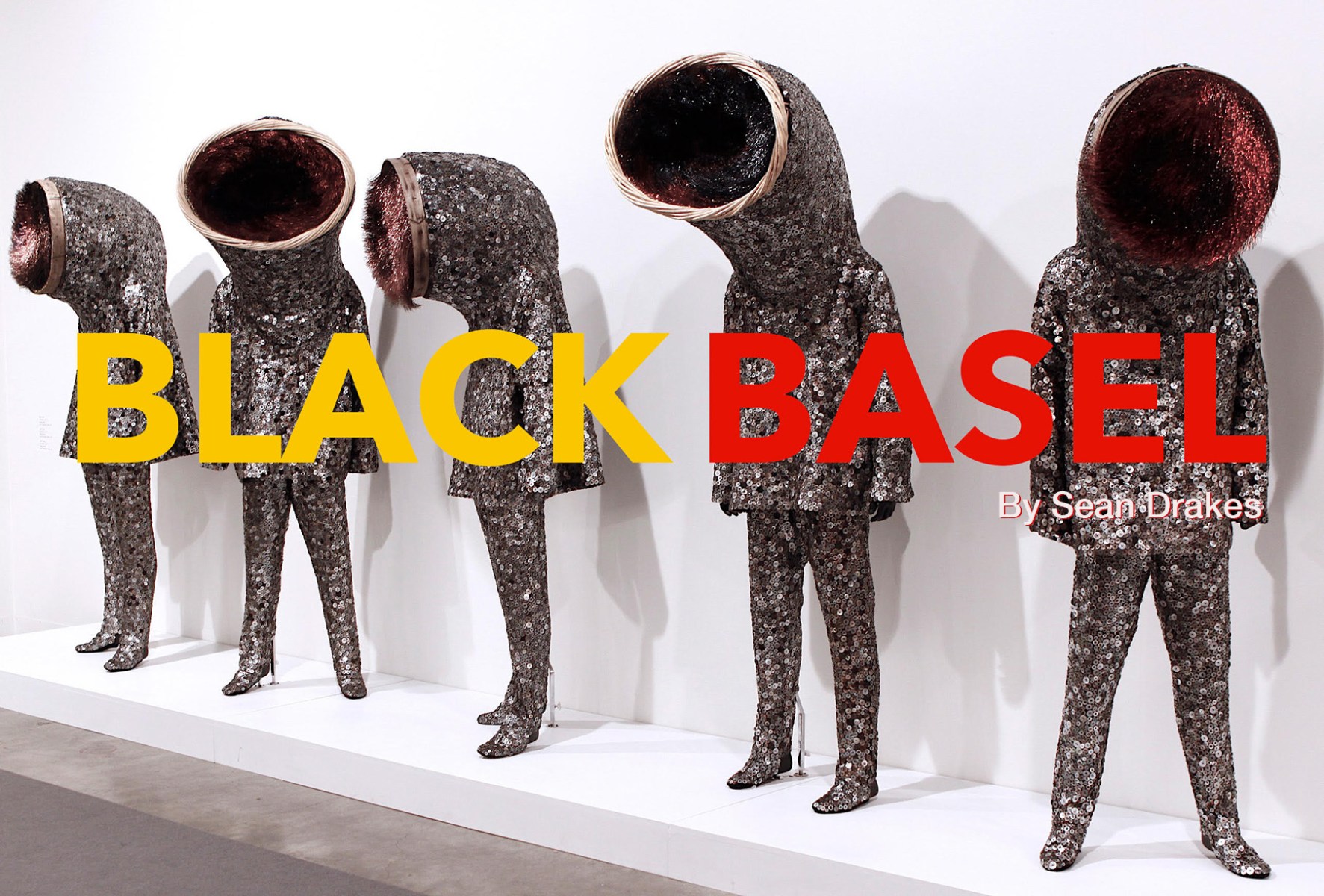
When creative activations and art fairs produced by Art Africa, NO COMMISSION, AfriCOBRA, and PRIZM claimed space adjacent to Art Basel Miami Beach then attracted collectors, scholars and admired artists, Black Basel was born. The intellectual and creative void their presence fills also creates access for communities, curators, and artists who feel priced out of the main event at the Miami Beach Convention Center.
For most of its 20 years, Art Basel Miami Beach has been billed as a 3-day event, though it easily commands a full week (Nov. 28 – Dec. 4, 2022) due to the dizzying array of satellite art fairs, hotel activations, museum unveilings, designer collaborations, private parties, and celeb performances to experience.
Barbadian artist Sheena Rose, whose career is on fire following coverage by The New York Times and Vogue, scored commissions for her vibrant, acrylic-based murals from institutions in Des Moines, Iowa (2022) and Washington, D.C. (2019). “When I first saw Miami Beach, I was impressed by the tents and the way they presented the artists’ work. I exhibited in PRIZM and felt honored to exhibit with artists from the Black Diaspora.” She says her most “surreal and exciting” encounter was when tennis legend Venus Williams purchased her drawing at a Rush Philanthropic Arts Foundation auction. “I do get overwhelmed with the tons of activities, but [Basel Week] is great for networking.”
Word-of-mouth reports are pivotal to attracting Caribbean artists to investigate showing during Art Basel Miami Beach. In 2021, art educator April Bey (Bahamas) appeared on “This Week in Caribbean Art and Culture“, a Sugarcane Magazine podcast hosted in the Convention Center, and Jeffrey Meris (Haiti) installed his multidisciplinary work at NADA Miami. The stimulating mixed media art by Ebony G. Patterson (Jamaica) is always a show-stopper, and Hew Locke, of Guyanese heritage, has had a striking assemblage of replica sea vessels suspended in the foyer at PAMM for multiple Basel seasons.
Nyugen Smith (NYC), Zak Ové (UK), Miles Regis (LA), Wendell McShine (NYC), Christopher Cozier, and Peter Sheppard lead the delegation from Trinidad & Tobago who have exhibited at various fairs during Basel Week. Sheppard positioned his award-winning miniature paintings “in a couple fairs as a steppingstone to have my work seen, if not sold.” He explains, “I looked for galleries [with] ties to the Caribbean Diaspora. “While one gallery charged him a wall rental fee, another invited him to show. “Most galleries selectively feature works from artists they represent and are confident will sell.”
Beyond Black Basel, these two Miami institutions showcase artists of the African Diaspora year-round: Museum of Contemporary Art North Miami and Little Haiti Cultural Center. During Basel Week you can also discover the brilliance of the Diaspora among the collection at Rubell Museum and NADA Miami near the trendy Wynwood Arts District, PAMM and Art Miami a short distance from touristy Bayside Park, and under massive tents raised on the sands of Miami Beach you can explore Untitled and SCOPE.
Many celebs jet to Miami to host Basel parties, but none get it lit like Swizz Beatz. His NO COMMISSION x Bacardi collab, which launched in 2015 with a free concert featuring the incomparable Alicia Keys, remains the hottest ticket. Other headliners over the years include Busta Rhymes, Chronixx and Meek Mill, often with a stack of celebs viewing from the rafters.
In lieu of having a Black Basel app to map your moves in Miami, drop the names of art fairs mentioned above in your social media search to locate experiences that will elevate your Basel Week.


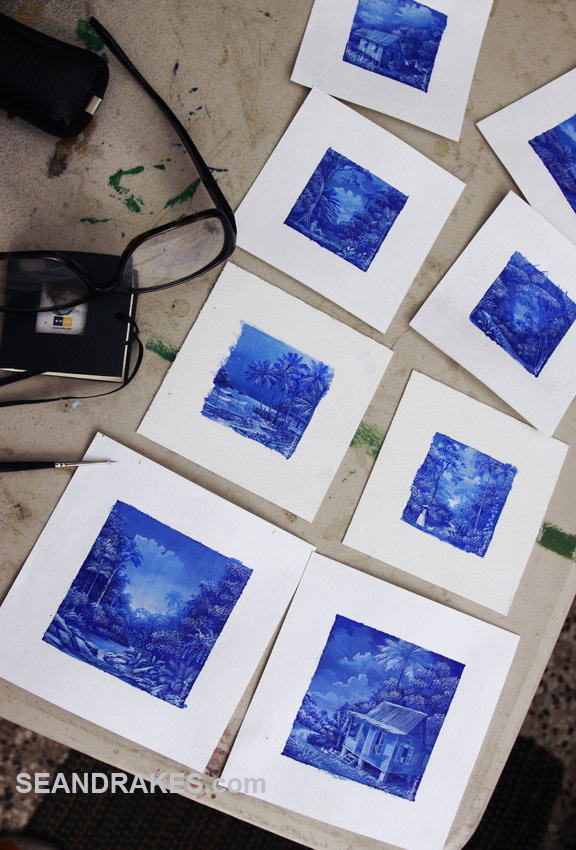
Artist Peter Sheppard earns honor for magical,
imaginative compositions of Trinidad’s splendor
The Northern Range is sumptuous and nurturing as she cradles the western corner of the capital city. The rainy season shaped the Range into a palette of greens that is dusted with gold leaf by the afternoon sun. This isn’t a description of an imagined composition painted by Peter Sheppard—who’s known for condensing majestic scenes into miniature art—this is the view from his cozy patio perched on Fort George in Trinidad.
The eldest of three, Sheppard was born to be a painter. His parents, Stephen and Margaret, painted and encouraged their children to paint. “I remember Christmas and birthday gifts were usually three small canvases and a pack of paints.” He would cut the 5”x7” gift canvasses in half. Sheppard often toured Trinidad’s mountainous and coastal terrains. “My dad used to drive me around on the weekends, not just to Maracas, but long drives across Trinidad,” recounts Sheppard. The natural splendor of Trinidad he encounters is weaved into enchanting eco scenes that exist only in his mind. “The quaintness of this land appeals to me.”
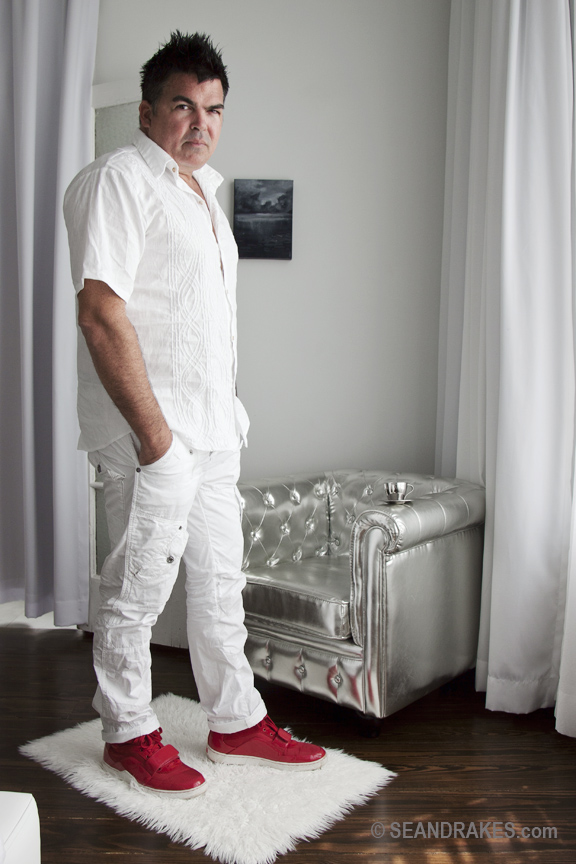 In Form 4 he studied technical drawing. “I was doing building drawing rather than mechanical drawing; I was attracted to perspective, and box houses were one thing I used in my perspective practice.” Those simple houses helped him develop a comprehension of perspective and sense of depth, and they became as commonplace as rivers and bamboo in a Sheppard miniature. His paintings of box houses dressed in bright hues appealed to tourists. Seventeen-years-old at the time, Sheppard found a niche. Soon his 3”x4” paintings were fetching $35 at the Art Buyer’s Fair with the Art Society of Trinidad and Tobago.
In the Caribbean market, the value of fine art is influenced by exhibition sales, gallery curator’s appraisal, demand from collectors, and illustrious affiliations. Sheppard, 46, is yet to mount a solo exhibit beyond Trinidad’s shores, but last May he attained an honor that is a game changer. The Hilliard Society of Miniaturists in Wells, Somerset, is a 31-year-old fraternity of artists who paint miniatures; the society was founded by Sue Burton. Though Sheppard has been painting for 30 years, he says, “I discovered in the last 5 years, that miniatures are my signature.”
On his first attempt to get into Hilliard’s juried show, Sheppard’s work was rejected because the surface of his paintings was a distraction. “I paint on canvas paper and the pores of the  canvas were a distraction for them,” explains Sheppard, “remember, they scrutinize miniatures under a magnifying glass.” The second year he submitted a monochromatic quartet from his “Blue” show—all four sold. “That was something that stood out,” says Sheppard. “It’s West Indian-themed but the way it was presented was contemporary—the work used cobalt blue paint.” In 2013 his submission was mounted on masonite board, a surface as smooth as a kitchen countertop. He lathered them in gold then applied his landscapes. As Sheppard describes: “I was painting with a smile on my face. I enjoyed painting the details with the gold luster underneath it, it’s really rich [work]. I sent them to London with such good energy.” Then he got a phone call with an unofficial announcement, that he is being awarded the Sue Burton Memorial Award for Best in Show. Jackpot! Sheppard’s third try, beat 80 competitors and earned him £1000 and coveted recognition.
What’s next? Possibly a show at the TT High Commission in London, and a collaboration that pairs his passion for food and lush landscapes with his fine art. “I love the miniatures, because it’s how I interpret nature, everything is delicate and precise and neat. When I get into a painting I go into a trance, it puts me at peace. The handling of the painting is very delicate, time consuming and very controlled. All the things I’m telling you are the complete opposite of my personality type.”
Isaiah Boodhoo and Carlisle Chang are artists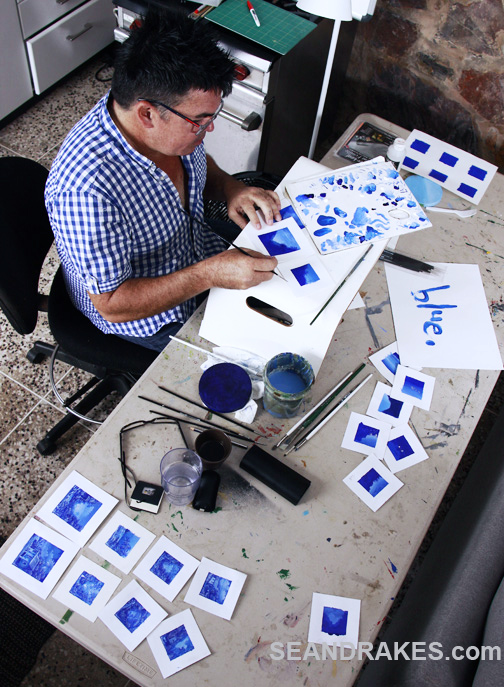 Sheppard admires, but he credits the late Wayne Berkeley, who designed theatrical sets and costumes, with inspiring his technique. “You look at my paintings and there’s a backdrop, then wings coming in on the left and right,” describes Sheppard. “It’s always like I make paintings into a 3D stage set. I paint the background first and I start bringing the work forward.”
His largest work measured 2 meters x 5 meters and took six weeks to complete. “I just felt like pushing the edges of the canvas out. [Sometimes] I feel I want to express [nature] bigger. Everything is still meticulously placed in those big paintings, and I am still using a 000 brush.” It’s a painstaking process. Sheppard chuckles as he repeats a comment often heard: “Dat is mad people work.” But to his collectors, Peter Sheppard is madly in love with creating miniatures that reflect his fascination with “all things to do with the Northern Range.”
© SEAN DRAKES
Recently published.
[ 404.654.0859 | SEANDRAKESPHOTO@gmail.com ]
Ocean Attractions
Enjoying star treatment on Celebrity Cruises’ Summit
I was seated at the wall of windows that wrap the Waterfall Grill, enjoying cinnamon waffles and omelets, when a pod of playful dolphins sprung from the twirling sea, one after another, to kiss the warm morning sky. Over the next five days of our sojourn aboard Celebrity Cruises’ Summit from Los Angeles to the Mexican Riviera, I anticipated more magical experiences in a departure from the ordinary.
 The Summit boasts 11 passenger decks and 1,059 suites that accommodate 1,950 guests, whose epicurean tastes are satiated with 45,000 pounds of beef, lamb, lobster, and fish. The crew, made up of more than 60 nationalities, provides Vegas- and Broadway-style entertainment; prepares and serves 9,000 meals daily in three dining rooms; and facilitates socials, seminars, and shore excursions. ConciergeClass is one of three unique brands of services—offering guests preferential pampering. At this level of service, staterooms are appointed with 24-hour butler service, guests receive dining seating preference, VIP invites to onboard events, and a variety of in-suite comforts.
Each day at sea allowed for indulging in a tireless roster of fun opportunities. To view the poolside cooking competition and live band, I joined Kathy and Gregg McCree from Brooklyn, New York, who had dropped anchor in a sun-kissed whirlpool spa. “We usually cruise for birthdays and anniversaries,” offered Kathy as we ordered smoothies, “we were told Summit had a mature crowd; so far we’re in the whirlpools most of the day.” That evening we dined in the plush, art deco Normandie, which is distinguished for its decoupage, flambé tableside service and dine-in wine cellar featuring 175 fine vintages.
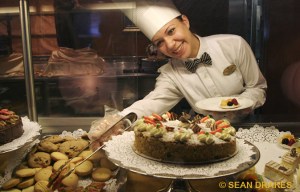 The abundance of tequila factories in Puerto Vallarta, our first port of call, supports the popularity of this excursion. Mario, our guide, steered us to a crowded demonstration and sampling of two-dozen flavors of the legendary libation. Later that evening, after dinner — and more tequila — we donned white attire and attended the masquerade ball in the whimsical Cirque du Soleil-designed lounge. Roughly a dozen excursion options are crafted for each port.
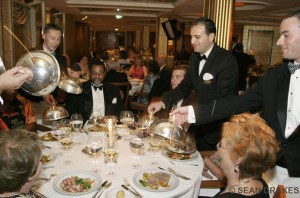 A colorful folkloric showcase followed by sightseeing along the waterfront, then silver shopping in the Golden Zone, easily filled our itinerary in Mazatlan. Founded in 1531, it’s Mexico’s oldest town. Cabo San Lucas is the hot spot for aquatic adventures. Qevin and I chose the two-bay snorkeling experience for the chance to swim amid flamboyant fish and got a great adrenaline rush wave-running back to the ship.
Michelle and Stephen White of Quartz Hill, California, on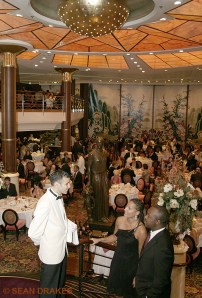 their fifth and first cruise, respectively, were among the guests snapping farewell photos as the anchor lifted. “I’m a casino girl myself,” whispered Michelle as we recapped the trip. “I wasn’t looking for a 24-hour party boat [which Summit isn’t]; the costume ball, bingo, and Broadway show are a good blend of entertainment.”
The last dinner at sea is a regal affair with tailored tuxedos and elegant gowns. A string quartet serenaded patrons as captain Michail Karatzas greeted his guests. At our table, Sandra and Dexter Bryant of Orange County, California — usually fervid conversationalists — were still in sensory heaven from the romantic Cleopatra Slipper treatment they enjoyed in the AquaSpa. To chart a course for your own divine cruise experience, visit Celebrity Cruises.
© SEAN DRAKES
[ 404.654.0859 | SEANDRAKESPHOTO@gmail.com ]
Short Stay: Jo’burg Rising
South African capital grows
as business tourism attraction
My first mission upon landing in Johannesburg was to find a perch from which to soak in a South African sunrise. Equally warm greetings showed up all along my itinerary which was packed with mild adventures of dining on stewed ostrich, trailing springbok in the wild, and visiting historical sites. There is a glow around Jo’burg, as it’s fondly called. The city feels like a phoenix rising from an ominous spell. Dozens of cranes are weaving towers into the skyline, an underground subway is on a fast track to realization, and the country’s GDP growth rate hit 4.7% in the third-quarter of 2006. Confidence is strong and infectious.
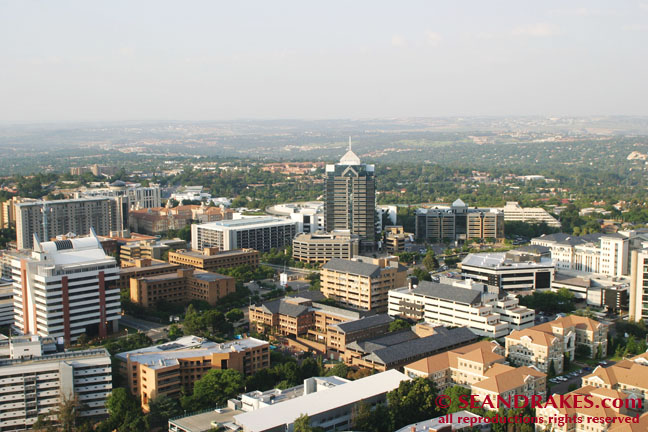
Slice of Jo’burg.
South Africa’s profile as a destination for meetings, conventions and incentive travel is poised to soar. “The reasons for optimism,” offers Cameron Brandt, International Markets Editor for Emerging Portfolio Fund Research, “include the government’s conservative and  consistent economic policy, the rapid expansion of the Black middle-class, forecasts for 10% GDP growth in China [which has] positive implications for commodity demand, and planned public infrastructure spending tied to the [2010 FIFA] World Cup.” On the flip side, caution is encouraged because of “the expansion of household debt and lack of experience many of the new middle-class have when dealing with credit, still very high levels of unemployment, and the country’s large current account deficit.” Visit www.southafrica.info for more insight on doing business in South Africa. Travel is about the journey not just the destination. On our 15-hour intercontinental flight from Atlanta in Delta’s BusinessElite Class ($6,600-$7,900) the pampering began at the gate with VIP compliments in Delta’s Crown Room Club.
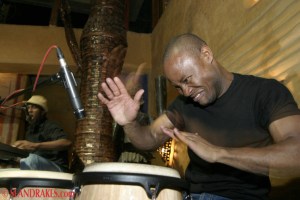
Blue Dot performs at Moyo.
On-board service deflects jet-lag and pleasures your senses with personalized five course gourmet dining and flavorful wines, all-leather luxury sleeper seating equipped with a state-of-the-art entertainment system, private video monitors, and a slew of comforts that make for a faultless five-star experience. Sandton, Jo’burg’s gleaming uptown district, bustles with Mercedes-Benz taxis shuttling folk to the Johannesburg Stock Exchange, Sandton International Convention Centre, restaurants in Nelson Mandela Square; among them is Lekgotla with its tribal chic 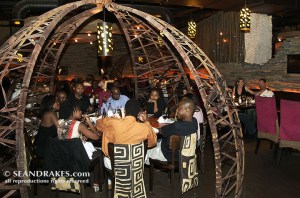 ambiance, and a massive mall with designer boutiques like Shakur Olla and Sun Goddess, all set near our hotel, the Michelangelo Towers. Italian heels and Swiss timepieces adorn guests who zip from tables at the lobby restaurant “8” to suites like my tech-savvy duplex ($715 per night). The ultra-swank Cupola suite has a 360-degree view of Jo’burg, private rooftop pool, butler and security staff and commands $5,700 per night for unrivalled luxury. Considered the ‘urban heart’ of South Africa, Johannesburg is set like an axle in the center of eight provinces: Cape Town, on the picturesque southwest coast, is famed for its lush winelands and whale watching, Cape Point, where the Indian and Atlantic oceans lock arms, and the historical site Robben Island. The North West province is home to the
 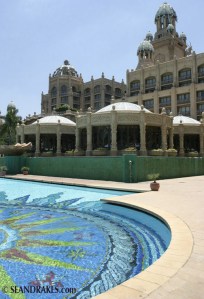 super-sized extravagance of Sun City which contains four hotels, that offer family attractions, casino gaming, two 18-hole par 72 golf courses and conference facilities. The ultimate safari adventure is in Mpumalanga in the northwest, where 10,000 elephants and prides of lions roam Kruger National Park. My guide, Joe Motsogi, owner of JMT Tours, charted a fulfilling excursion that included shopping at Chameleon Village and an exhilarating sunset safari drive. Seasons in South Africa are distinguished by precipitation rather than severe temperature changes. Rain or shine there are eventful attractions year-round: Durban July is an illustrious horse racing event steeped in aristocratic tradition; young and celebrated musicians rule the spotlight at the Standard Bank Joy of Jazz Festival; golf enthusiasts flock to majestic greens for the Million Dollar Golf Challenge and the Nelson Mandela Invitational Golf Challenge; and wine connoisseurs attend Winex to sample and shop for vintages from over 200 South African wineries.
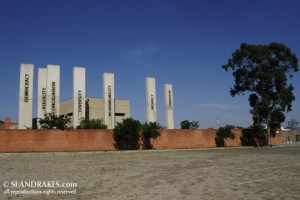
Apartheid Museum.
Near downtown Johannesburg is the Apartheid Museum, a sleek, modern structure that houses a comprehensive and riveting chronicle of South Africa’s journey to democracy. It also invokes optimism for South Africa, a country as a democracy that is only 13-years-old. It’s a new day. Contact South Africa Tourism to facilitate your convention, vacation and incentive travel needs.
© SEAN DRAKES
Previously published.
[ 404.654.0859 | seandrakesphoto@gmail.com ]
In the Mas Camp with K2K
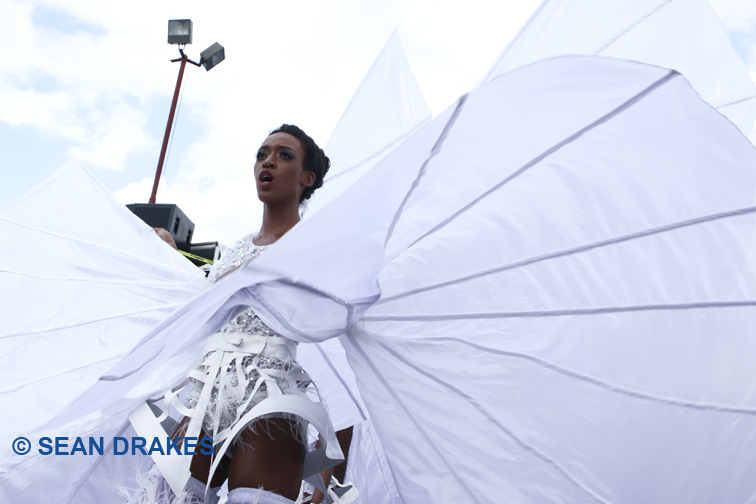
Trinidad Carnival attracts thousands of spectators and has offered inspiration to creative teams at Disney and Cirque du Soleil. This year, a couture-centric masquerade band presentation by a pair of newcomers sparked hopeful dialogue around the return of innovation to the festival. Before unleashing their inaugural band onto the streets of Port of Spain, bandleader Karen Norman, one-half of the K2K Alliance creative force, shares a few insights.
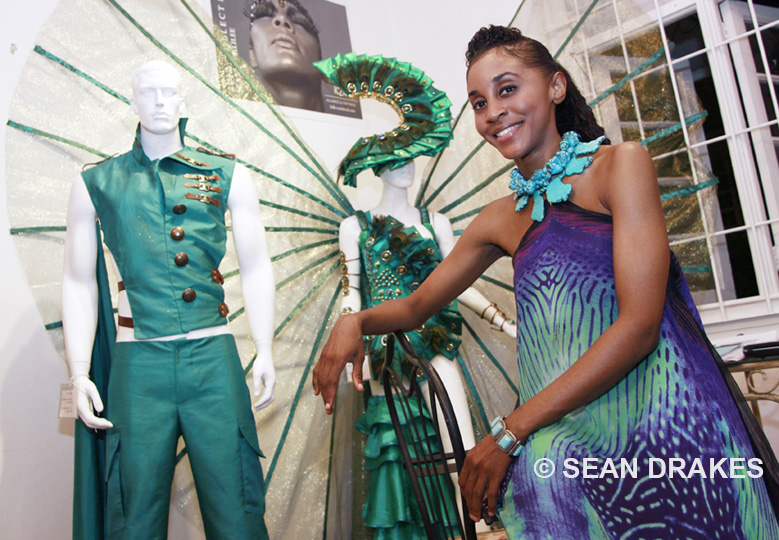
Karen Norman at K2K mas camp.
WHAT WAS YOUR BIGGEST FEAR AT THE START OF THE BAND DESIGN PROCESS, WHAT IS YOUR BIGGEST FEAR NOW– THREE WEEKS BEFORE SHOWTIME?
One of the most compelling parts of the design process is stretching our imagination to create a palatable and exciting concept. Putting pen to paper was the easiest part of the journey. Exposing the mas and the story to the public was the hard part and one of our greatest fears. Such thoughts like: ‘Would the concept of fusing mas with fashion be accepted? Would the onlooker appreciate the story?’ were some of the concerns we shared. One of the greatest challenges we face today is getting the mas community to sign up for change. Even though change is one of the things that is constant, it is not always the easiest thing to accept, nor is it the easiest thing to sign up for. Thus, even three weeks before showtime we are asking those masqueraders who have put away their “mas-shoes” since the discontinuance of [Wayne] Berkeley and [Peter] Minshall to pick-up their dancing shoes and to revel with K2K.
 WHAT WOULD YOU NOT DO AGAIN?
I was once told that all experiences whether good or bad, leads us to this point in time; to this moment, to the present. Thus, while we would not like to relive any of the challenges that have presented itself over the past 5 years, we would not change anything.
WHAT DOES THIS BAND HOPE TO ACCOMPLISH OR WHAT MESSAGE WOULD YOU LIKE MOST TO RECEIVE FROM YOUR ENDEAVOR?
The band hopes to return mas to traditional splendor. We would like to take our brand to the international runway … open both national and international fashion shows. We would like to showcase our designs in musicals on Broadway and even in concerts. Maybe one day, when you see Machel [Montano] in concert you will see his team dressed by K2K. On the international arena, maybe one day we will be the opener for Lady Gaga. The possibilities are endless. Minshall showed the world who was Minshall through exposing his talents on several Olympic platforms, we hope to be those Trinidadian twins/women who expose Trinidad mas design to a new arena.
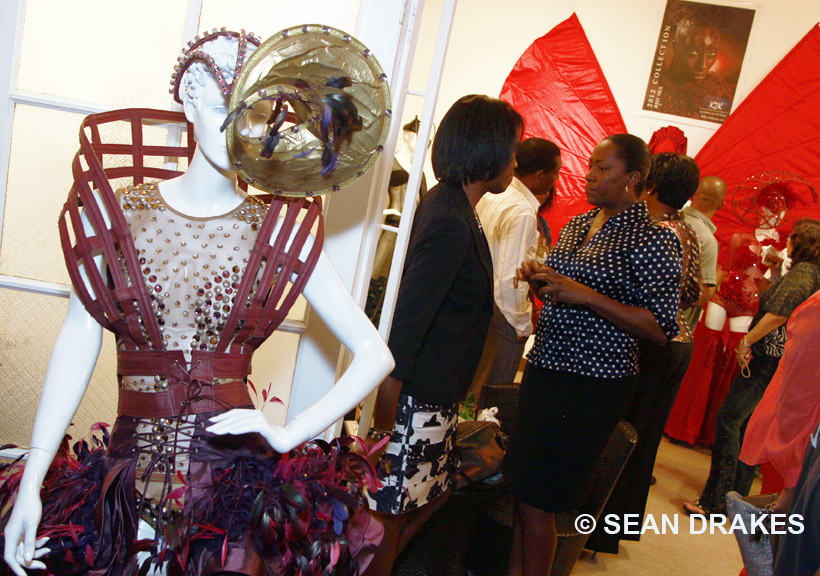
Runway-ready costume prototype at K2K mas camp reception weeks before Carnival.
HOW WAS THE BAND’S NARRATIVE BORN?
In 2012 “water” is used as a metaphor to describe the psychological journey of man. Life is not just dependent on water, but life is water. The same way the oceans and seas yield and change, man, too, must adapt as the social and political environment changes. The same way that water has different temperaments, similarly man is not always even-keeled (e.g., sometimes water is rough and choppy). Similarly, sometimes we are driven to anger. Interestingly, while the storyline for “The Waters – Seas of Consciousness” starts with River Jordan (Birth)–which means when man comes into the world he is naive. He is unaware of the social environment and even the political landscape. On a more personal level, the storyline, our story for 2012 started at the Dead Sea (Ruin). Ruin is a state of mind and can be defined as “the deepest darkest place that man knows”. And for Kathy and I, ruin was real–it was lonely and dark. The last two years in New York City has been extremely challenging professionally and emotionally. In 2010 we each felt like we hit rock bottom. Creating the band was therapeutic. It was our redemption. It helped us to re-assess who we each were. It also made us realize that while we are shattered, we are not irrepairable. The band is our re-discovery; our re-invention of self, which is coined as The Saraswati River.
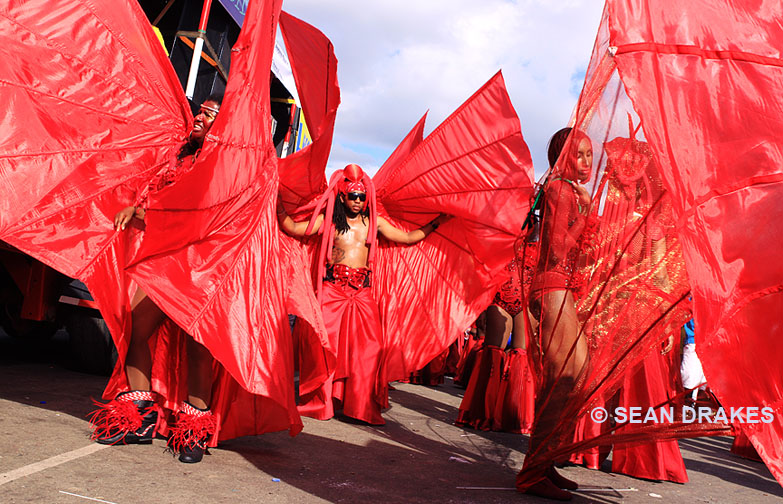
Masqueraders present the band at Queen’s Park Savannah on Carnival Tuesday.
WHAT TRADITION(S) IN CARNIVAL DOES YOUR BAND REFERENCE OR USE AS A GUIDELINE/FOUNDATION?
We look toward the great masters such as Minshall and Berkeley for a constant reminder that you are never too old to dream, and mas design is built by exploring your imagination and not being afraid to dream.
WILL POLITICS OR CURRENT AFFAIRS EVER FUEL YOUR BAND’S NARRATIVE?
Over the next three years the storyline does not reflect the political environment. In terms of storytelling, we hope to constantly bring a relatable yet interesting storyline to the table.

Model displays costume and makeup for section of The Waters Carnival band.
WHICH ELEMENTS OF YOUR BAND ARE MANUFACTURED IN T&T, AND HOW MANY ELEMENTS WERE MANUFACTURED IN CHINA?
Much of the costumes are being produced locally. The goal is to encourage greater use of our locals and employ the talents on the island.
UPON FIRST SIGHT OF YOUR MAS, IT’S IMPOSSIBLE TO IGNORE THE HIGH FASHION POINT OF VIEW IN YOUR DESIGNS. WILL THIS APPROACH BE A STAPLE OR WILL THAT SENSIBILITY SHIFT?
Mas, like art, is contemporary. It should reflect the time. With that said, the goal of our brand is to keep the designs forward-thinking, fashion-forward, and chic. The fashion arena is not static. It is constantly evolving and similarly, our brand will morph/evolve as we grow in the arts.
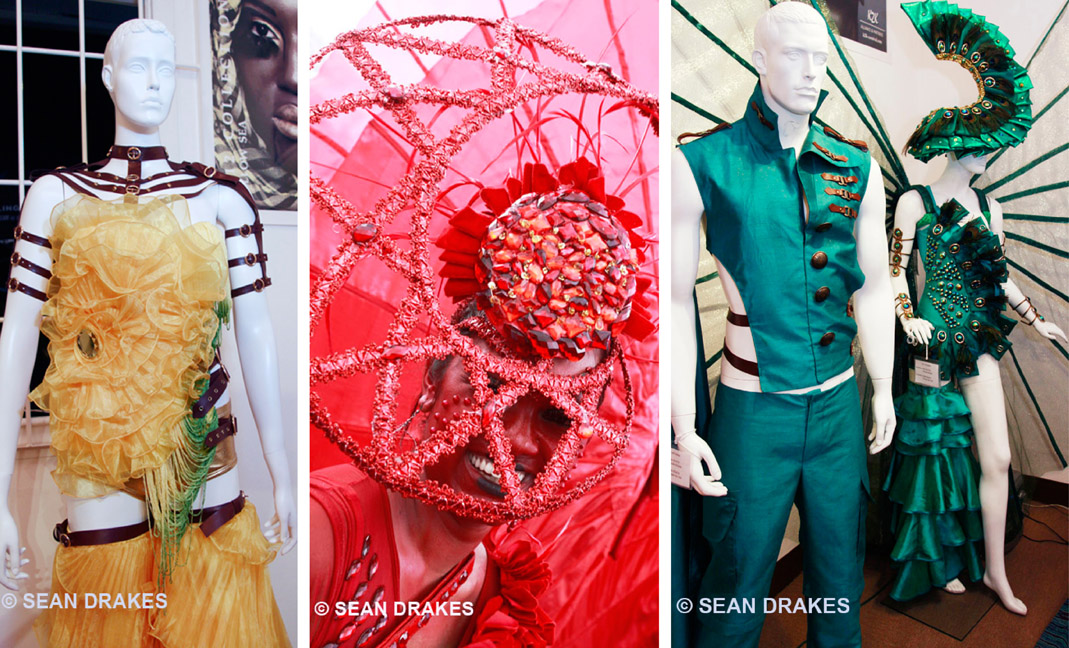
Details of the The Waters mas band by K2K Alliance & Partners.
Band presentation: The Waters – Seas of Consciousness
Bandleaders: Kathy & Karen Norman (K2K Alliance & Partners)
Band size: Medium with 8 sections | Membership: U$416 – U$900
Mas camp: 51 Cornelio St., Woodbrook, PoS | 868-767-9655
© SEAN DRAKES
[ 404.654.0859 | SEANDRAKESPHOTO@gmail.com ]
Related articles
Short Stay: Nature Thrills in Belize
Green tourism can offer nonstop adventure,
Sean Drakes discovers the wild side and
soothing aquatic splendors of Belize
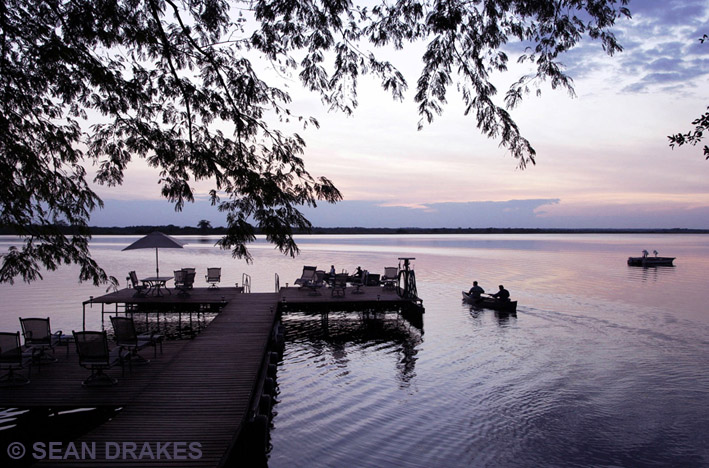
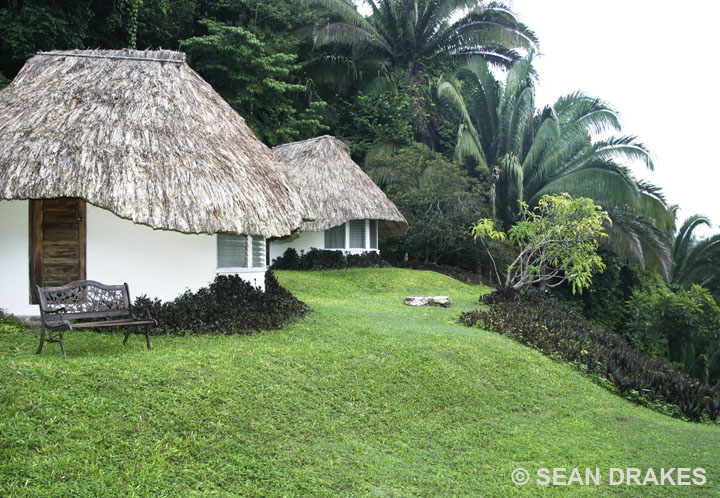
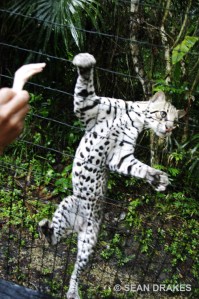
The vast, mysterious night sky silenced every thought in my head as I marveled at the dazzling blanket of low-hanging stars that lit our course across the New River. It is the longest river in Belize and the 90-minute river rid e is the most exhilarating route to Lamanai Outpost Lodge, an eco-friendly sanctuary with 17 rustic cabanas nestled in a vibrant habitat teeming with wild black howler monkeys, crocodiles, and more than 250 species of vivacious birds. The thatch-roofed structures receive crisp surround-sound of the restless wildlife. The lodge is named after the region, which translates to “submerged crocodile.”
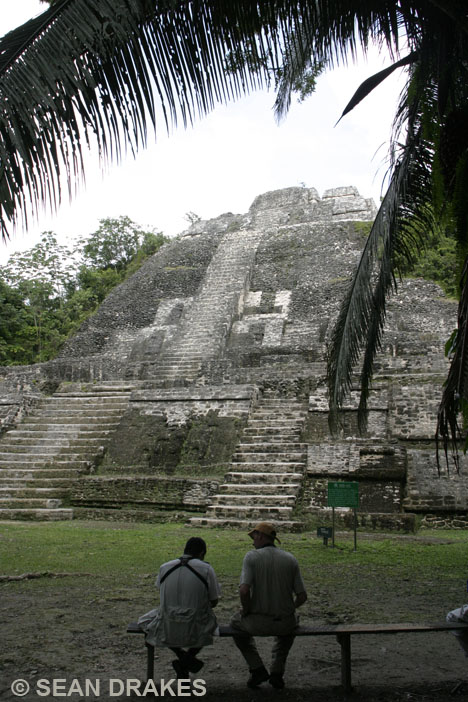
There are eight in our group of bird watchers, novice hikers, and seasoned thrill seekers who have ventured to a destination where roughly 50,000 Mayans lived between 1500 B.C. and the early 1700s. Situated north of Belize City, it’s the jewel of the Orange Walk District, which offers nerve-tingling wilderness adventure and archaeological expeditions.
In the 20th century, major excavations of the area unearthed temples of an ancient Mayan civilization that survived the Roman Empire. Hieroglyphic decoders believe the site carvings record sensational stories of war and peace. The trails to the Mayan ceremonial site at Lamanai are swarming with ruthless mosquitoes that laugh at repellent, but the breathtaking view from the summit of the High Temple is worth the treacherous climb.
 There are other excursions: At daybreak bird watchers in our group set out to scout for gray catbirds, great kiskadees, and mangrove swallows. After dusk they revisited the riverbank to stalk nocturnal birds, while the rest of our group went crocodile hunting. Well, we accompanied the guide who caught (and released) the toothy reptiles.
___::___
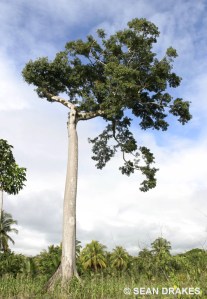
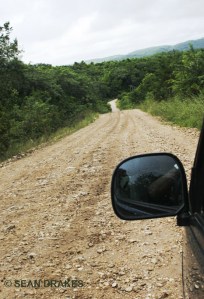
Leaving Lamanai we traveled by river, highway, and rugged dirt roads to our lunchtime pit stop at Crooked Tree Wildlife Sanctuary, a haven for migrating 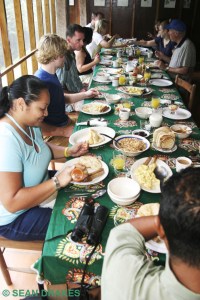 birds. Crooked Tree is noted for its abundance of cashew trees which fuel a fledgling cottage industry that produces cashew jam, cashew wine and a weeklong cashew festival. Guest house proprietor Verna Samuel served us a sampling of her cashew creations after a hearty lunch at Bird’s Eye View Lodge. The forested Cayo District, 90 minutes southwest of Belize City, was our next overnight destination. This region offers cool creeks and the dramatic Thousand Foot Falls that plunge 1,400 feet.
By day four we arrive at the bungalows and communal house at Pook’s Hill, a 300-acre reserve and rainforest near the Maya Mountains, which during our visit serves as an ER for a weak young owl who lingered awhile then patiently grasped its last breath. Here, our group geared up for a canoe tour through Barton Creek Caves.
 Rainwater created underground rivers and carved cave systems that were inhabited by deities and Mayan ancestors. In Mayan culture, caves (actuns) were a portal to the gods of the underworld and are where sacred rituals and sacrifices occurred.
  Skeletons, footprints, pottery, and cathedral ceilings are discovered in Belize’s 250 cave systems.
Belize City is not the capital but it richly represents the pulse of the country—it’s also a hub for island-hoppers. Belize is set between Mexico and Guatemala and is two hours by plane from Miami. English is the official language though Spanish is widely spoken by its 325,000 residents. At the Belize Legacy Beach Resort the cedar and mahogany condos are appointed with the modern comforts big city dwellers relish, and destination treats such as deep-sea excursions, aromatic spas, and fine dining by head chef Rafael Valdez.
___::___
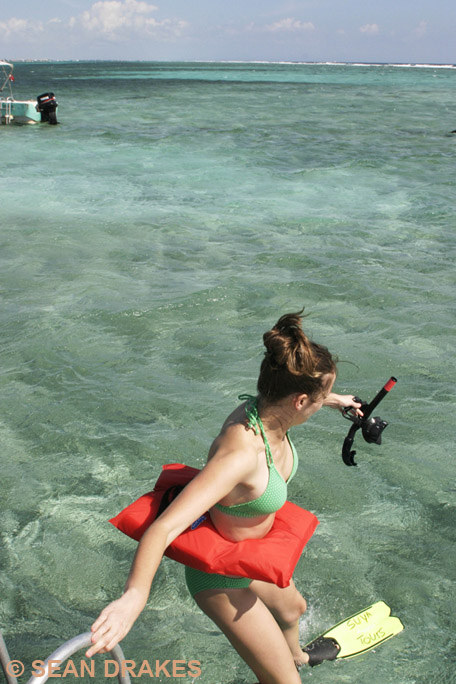
Activities such as snorkeling in Shark Ray Alley in the Hol Chan Marine Reserve allows brave hearts to pet and feed stingrays and Nurse sharks. Nightfall lures sleepless souls to the loud and festive Wet Willy’s in San Pedro Town, where two strong drinks of rum and the boat ride back to the resort serve as a relaxant. I enjoy a sound sleep ready to wake to a new adventure with nature. Visit www.travelbelize.org for help charting your course through the wild and mild side of Belize.
© SEAN DRAKES
[404.654.0859 | seandrakesphoto@gmail.com]
LA Confidential: Brad Johnson fuels a Downtown revival
An appetite for dining out is integral to life in Los Angeles. It’s pretty common for movie scripts and record deals to get the greenlight over a four-course meal. For restauranteur Brad Johnson, success in the fine dining sector of the food service industry affords prized access to the pulse of Hollywood.
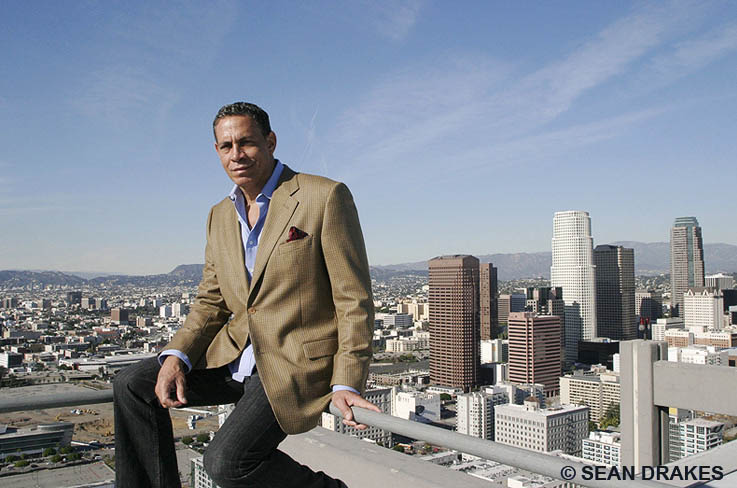
Brad Johnson atop Windows in Downtown Los Angeles.
Johnson, a native New Yorker, migrated west in 1989 and opened the Roxbury, an immensely popular restaurant and dance club that was immortalized in the movie “A Night at the Roxbury.” His follow-up contributions to LA’s nightlife, Georgia (co-owned by Denzel Washington) then The Sunset Room (both now closed), helped spark the revival of the Hollywood business district. These days his passion for dining is invested in Downtown Los Angeles where he manages an impressive net income turnaround for Windows restaurant, which is part of Earvin ‘Magic’ Johnson’s portfolio.
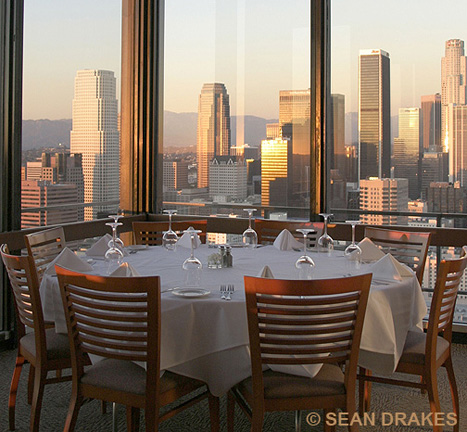
Table at Windows with a drop dead gorgeous view.
When Johnson entertains visitors he avoids the beaten-track. “I’ve taken friends to classes at Power Yoga, to dine along the Malibu coast, and to The Ivy or the Newsroom where you might find a fair number of [film] industry networkers.” “I love exploring Chinatown and The Farmer’s Market on Main St. in Santa Monica on Sundays,” adds Johnson, who frequents the nine-mile bike path that starts in Manhattan Beach and snakes along the vibrant Venice Beach boardwalk. Major boxing events and the uninhibited nightlife in Las Vegas provide an alternative weekend experience for Johnson who manages V Bar at The Venetian resort. “Jobs and people are always turning over so there’s a constant search for what the next thing is,” he says, “since people [in LA] define themselves by where they go and who they’re sitting next to it’s important to know what place that is at any given time.”
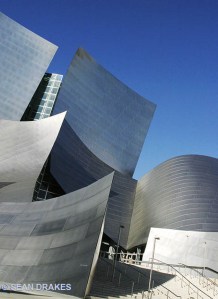
Walt Disney Concert Hall.
Restaurant sales in California in 2005 tipped the $50 billion mark, in 2004 visitors to LA spent $12 billion, and LA ports handled $235 billion in trading activity. “Obviously the entertainment industry is the hub of the wheel,” shares Johnson, “as for emerging opportunities, LA’s gone through its cycle there are a lot of Downtown developments going up [and fueling the construction industry], but we’re at the tail end of that boom.” The Staples Center, Museum of Contemporary Art Los Angeles, and Los Angeles Music Center have principal roles in casting Downtown as a hip destination for sports and performing arts attractions. The 2007 arrival of LA Live, a sports and nightlife venue that houses the Grammy Museum, an ESPN studio, bars and bistros, should confirm LA’s new ‘It’ address.
“LA’s an easy place to live though it’s getting more expensive and congested,” admits Johnson, “it’s still a forward thinking city. If you’re not in New York the only other place to be is Los Angeles.” Learn more, visit the official site of the LA Convention and Visitors Bureau.
STAY: The Sunset Tower Hotel “Is low-key, a little more exclusive and a bit more expensive,” offers Johnson. Its art deco architecture hints at the elegance of its suites that offer views of Beverly Hills and Hollywood Hills.
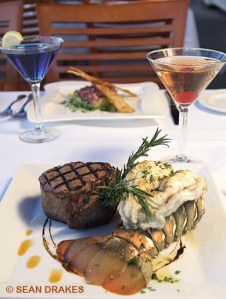
Petit Filet with Lobster Tail.
DINE: The unobstructed 360-degree penthouse view from Windows is as luscious as the Petit Filet with Australian Lobster Tail or Bone in Rib Eye, both specialties of this steak house and martini bar situated near Staples Center.
CHILL: After lunch Johnson designs a relaxing afternoon in West Hollywood by perusing “spiritual, meditation and New Age releases” at Bodhi Tree Bookstore before drifting to Elixr for a mind-clearing herbal tonic. Here a tranquil garden offers “a place to sit and read.”
ENJOY: Downtown’s cultural jewel, Walt Disney Concert Hall, offers self-guided audio tours of this spectacular structure and year-round performances by touring choirs and orchestras. Catch a free exhibit at California African American Museum, which preserves the legacy of African American culture in the western states.
© SEAN DRAKES
Previously published.
[ 404.654.0859 | seandrakesphoto@gmail.com ]
Related articles

15 Minutes: Chef Franco Savors Argentina
Fernando Franco’s kitchen preps 400 dishes daily,
Sean Drakes surveys the chef’s table
When you’re the executive chef of a restaurant situated at a premier address for conferences and international business travelers, expectations are high and distinction is everything.
Fernando Franco has been at the helm of Waterfront Restaurant since its January 2008 opening at Hyatt Regency Trinidad. The native of Buenos Aires, Argentina has worked for Hyatt since 2001. “I think it was a very good idea,” shares Franco, 43, “to open a hotel is like to have a baby, you see the baby from when it’s born. To be here from inception was very exciting.” Franco has created inventive courses at hotels in Europe, Spain and Portugal. His culinary career was launched in 1989 at Alvear Palace Hotel in Argentina where he was a chef de partie. He also served as chef at the US Embassy in Argentina.
Trinidad experienced a restaurant boom in the last decade. The capital city’s allure to the international business sector was heightened after Hyatt catered to President Barack Obama at the Fifth Summit of the Americas in 2009. Franco reinvents menus every three or four months with innovative pairings and approaches using local ingredients. He turned down his pots for 15 minutes to celebrate an Argentinian passion for beef.
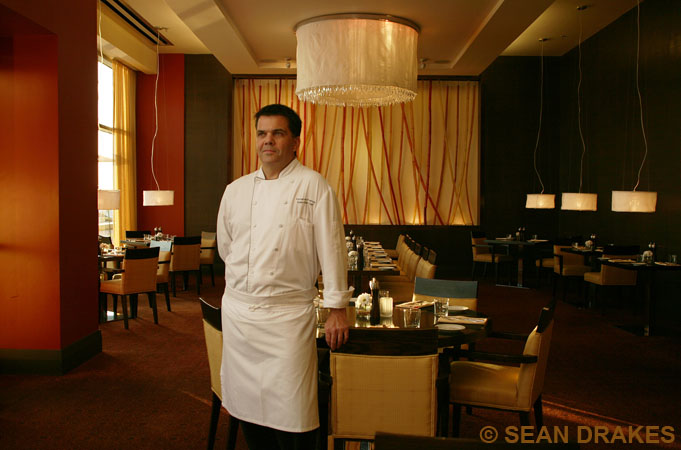
Executive Chef Fernando Franco at Waterfront. Photo: SeanDrakes.com
Franco’s approach to fusing culinary traditions of two cultures onto one menu:
“When I make menus it’s funny,” begins Franco, “with the chef you know all the different ingredients…the produce, you know the taste you know the flavors, and when we talk about new menus and we invent new dishes you mix together ingredients, but you think in terms of flavor. The lamb is good with this herb and this carrot, and then you put the mash, because you know the different flavors and combinations, you don’t need to try the dish. You know when it’s good and it’s not good; take a carrot sauce and you put a sausage with too much herb it’s not that good a combination.”
Franco observes the divergent food habits of three cultures:
Upon arriving in Trinidad his first task was to scour local cookbooks to acquire a primer on indigenous ingredients. Chadon beni, bhagi. dasheen bush, curry and coconut milk are the ingredients that are now fixtures in his culinary arsenal. “The big difference between [Trinidad and Argentina] is breakfast,” suggests Franco, “here you have the doubles, it’s spicy and fried, in Argentina it’s just bread or croissant and coffee, nothing else. It’s not like in the States, they eat eggs, bacon, sausage.”
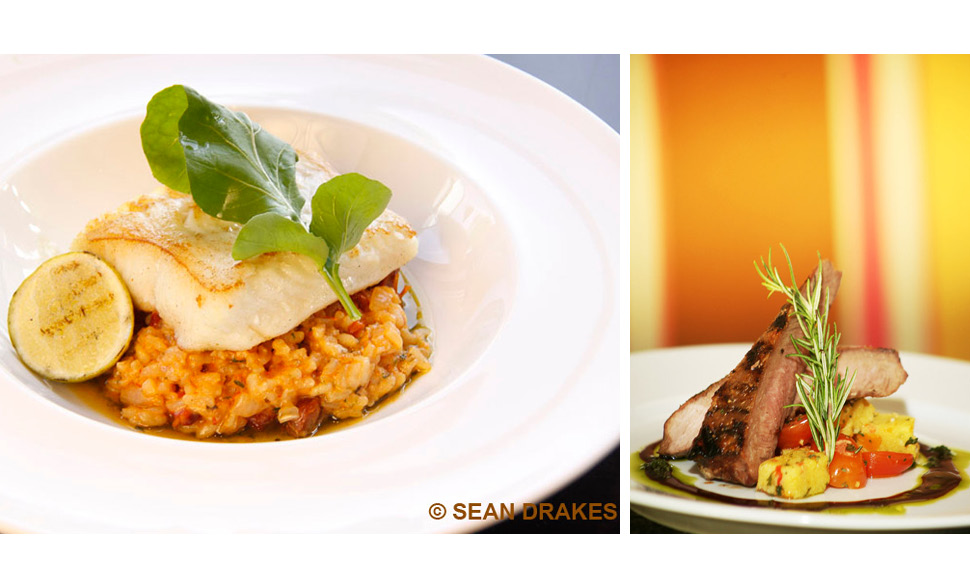
Sun-dried tomatoes herbed risotto with seared sea bass and fresh organic arugala lettuce. Right: Roasted lamb loin, sweet pumpkin "coo coo" with organic cherry tomato and a merlot reduction. Photos: SeanDrakes.com
Franco factors in geography and creating an experience to feed meat lovers:
“It’s different here than in Italy, France, Miami or Buenos Aires, we have different kind of guest in each place,” he notes. “In Trinidad we have plenty products. You put on a list all the products you can find here, then start doing the combinations,” explains Franco in his slightly patchy English. To construct menus he considers: “If I use white fish and salmon [on a current menu], I find another fish, like sea bass and snapper [for a new menu]. If I used before lamb chops and now lamb legs, next menu I use lamb shank.” Hyatt Regency Trinidad recently unveiled themed dining nights with Argentinian feast for meat lovers on the first Wednesday of each month.
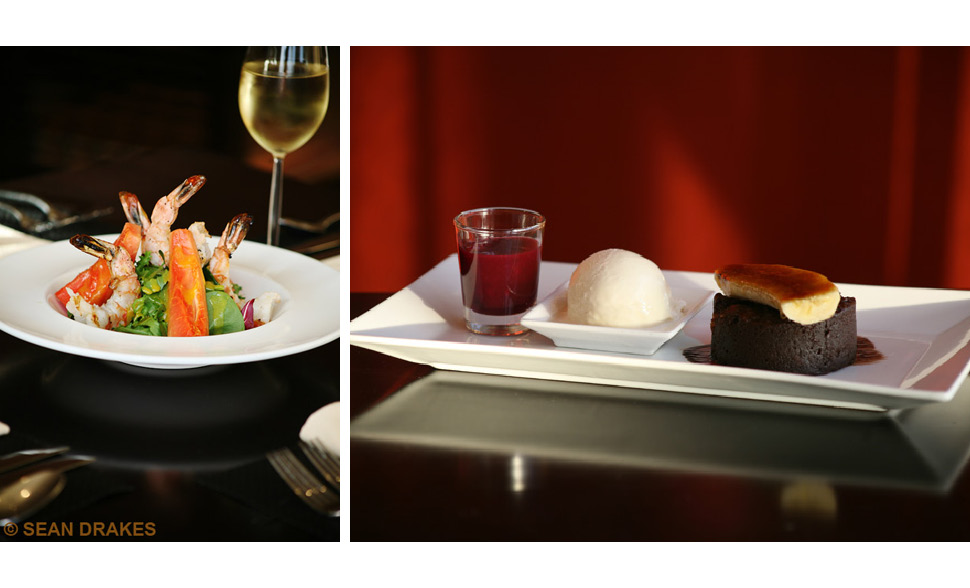
Shrimp and papaya salad served with organic mixed greens with a lime vinaigrette. Right: Dessert trio of steamed chocolate and banana pudding with caramel sauce and vanilla gelato. Photos: SeanDrakes.com
Franco embraces culinary traditions that preserve the bond to his homeland:
“My father cooked on holidays, weekends, special days,” recalls Franco, “all the family worked together in the kitchen.” Franco apprenticed with Francis Mallman and El Gato Dumas, who are credited with launching a culinary revolution in the ’80s that converted aspiring engineers into celebrated chefs, and spawned a slew of culinary institutes in Argentina.
“We are famous in Argentina for beef,” claims Franco, “the rib eye is one of the best cuts now, the strip loins is very good. In Argentina parrillas (bistro-style eateries) serve every cut of beef. On Argentina Night we have the parrilla on two large outdoor grills, we grill beef, lamb, pork, sausage.” Another new fine dining attraction at Waterfront is Brazilian Night. The black bean-based feijoda, explains Franco, is a traditional Brazilian dish served for lunch on Saturdays. For feijoda, most items on the menu are cooked with black beans. Once cooked, the beans are extracted from a black liquid which is separated into six to eight pots and used as stock to cook sausage, bacon, dried meat…all the different parts of the pork.
Franco spends 12-hours each day in a kitchen with his staff of 55. Though he finds time to visit Maracas Beach for a shark ’n bake treat, Franco’s charge to be a creative leader at Waterfront Restaurant keeps his plate full.
© SEAN DRAKES
[ 404.654.0859 | SEANDRAKESPHOTO@gmail.com ]
Short Stay: Casa de Campo
Casa de Campo is an extraordinary island outpost,
Sean Drakes samples the beautiful life
If I try to picture what a replica of a 16th century Mediterranean village situated on a coastal bluff in the Dominican Republic would feel like, I couldn’t have visualized Altos de Chavon in Casa de Campo. This ultra-exclusive resort and residential community is a Caribbean destination that is part 16th century, part 21st century and passionately devoted to the arts.
The levels of luxury accommodations here aim not to be outdone. After all, some of the richest business tycoons own palatial homes here, and both a famous Bill [Gates] and an infamous Bill [Clinton], along with a host of Hollywood highbrows, have deplaned in the private airport here. Name-dropping isn’t part of the accepted local culture, if you want to feel welcomed. I learned this from Angel, the resort agent I befriended and who personally arranged my VIP access. My tour of this 7,000-acre sprawl in La Romana, which is 130 miles southeast of Santo Domingo, starts in the 16th century.
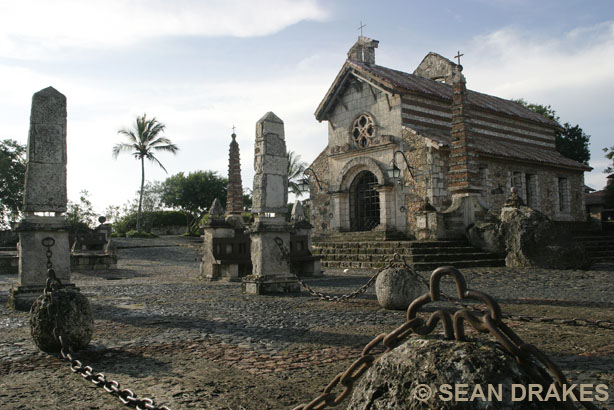
Altos de Chavon at Casa de Campo. Photo: SeanDrakes.com
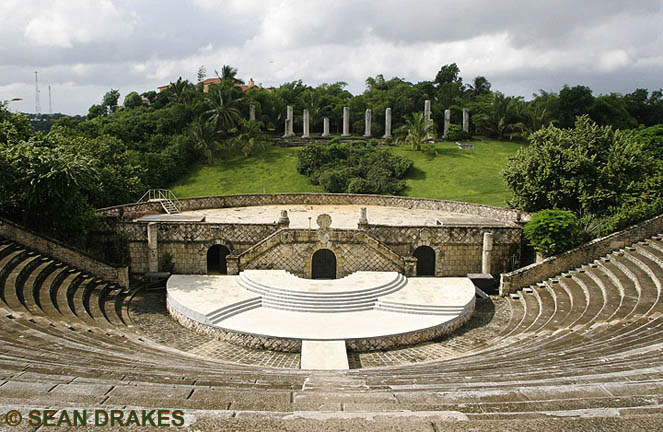
Altos de Chavon is a replica of a traditional Mediterranean village, it was built on the highest point overlooking the Chavon River. Construction of the coral block and terracotta buildings that frame narrow cobblestone walkways, began in 1976 under the stewardship of Italian artist Roberto Copa. The final stone was laid in 1982. Walking the site at midday feels like a Hollywood set for a movie involving a romantic tryst in Europe. You can dine at bistros or three specialty restaurants: El Sombrero, La Piazzetta and Café del Sol.  The site houses a 5,000-seat Grecian-style amphitheatre that has hosted Dizzy Gillespie, Gloria Estefan, Julio Iglesias, Alicia Keys’ music video shoot and the Dance Theatre of Harlem. There is a Regional Museum of Archeology that is home to a collection of pre-Columbian ritual artifacts. And an art gallery and craft ateliers that make ceramic and silk-screened souvenirs, and The Altos de Chavon School of Design caps the effort to market Casa de Campo as an arts-friendly destination. You should note: The School of Design offers degrees in design fields and the fine arts, and is affiliated with Parsons School of Design in New York and Paris.
 The Dominican Republic, is the Spanish-speaking territory of the island of Hispaniola, a border with a treacherous history separates it from Haiti. Puerto Rico is just 60 minutes east by plane. In order to deliver me to the resort’s doorstep, my driver surrendered his license at a security stall that has the span and scale of an interstate toll booth. That was the first cue to the grandeur that is a staple at Casa de Campo.
I am in a chic suite, but Casa de Campo resort offers the option to supersize your accommodation with a rental villa tastefully lathered with luxury. Exclusive and Oceanfront Villas host up to 12 guests at roughly $840–$2,445 per night ($577–$1,345 off-season), that includes maid and butler service, breakfast prepared in your villa, a pool or whirlpool, and concierge service for sporting and dining reservations, and private airport transfers.
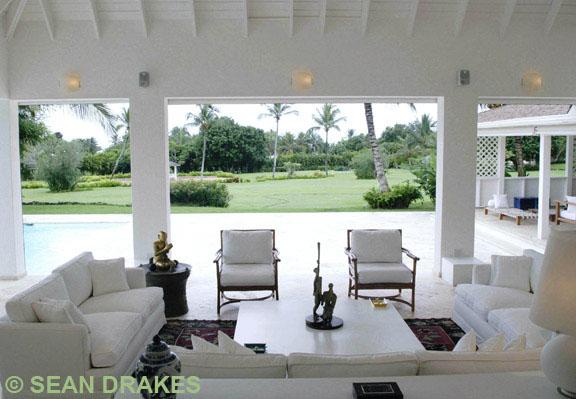
Private residence at Casa de Campo. Photo: SeanDrakes.com
I won’t name-drop, but I have the good fortune and pleasure of photographing two gorgeous private residences during this visit. Both homes reside on an 18-hole golf course. There are three here, each designed by Pete Dye: Teeth of the Dog has seven holes skirting the ocean and is ranked #17 on Golf Digest’s list of top 100 courses in the world. Links is a hilly inland course with five holes that tangle with lagoons and lakes. The Dye Fore course is positioned 300-feet atop the bluffs of the Chavon River, it is a mesmerizing masterpiece. Its 7,800-yard par 72 layout attracts and challenges pro golfers who shell-out $90 – $215 per person per round.
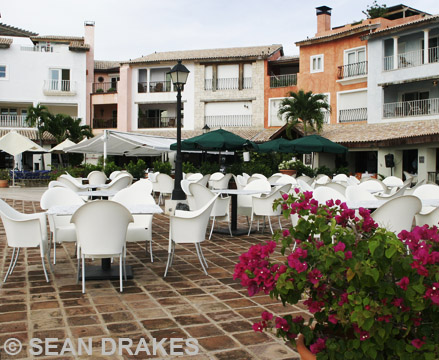
Marina at Casa de Campo. Photo: SeanDrakes.com
I grabbed lunch at Chinois at the marina fashioned after Italian portofinos. I am passing on shopping at designer boutiques, shooting sporting clays and playing tennis (there are 13 courts). My visit is out of season for the polo matches hosted
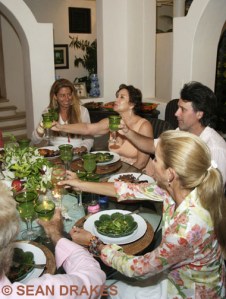
Cuban artist Bibi Leon (2nd from right at top) toasts guests at her home. Photo: SeanDrakes.com
November – May at the equestrian facility, which has five fields and 70 trained ponies. Instead, I’m bound for a day trip sail to Catalina Island.
After sailing, a dinner party at the home of Cuban artist Bibi Leon is a great wrap to the day. Walking through her elegant front door, my feast begins. My eyes are restless, in every room, there’s original creative expression by Spanish artists to admire. Tomorrow, I will ride Bibi’s coattail as we soak in the decadent interior design of her friends’ vacation homes, a collective that can fill two coffee table books. This is la dolce vita, where the air always feels rare.
© SEAN DRAKES
Previously published.
[ 404.654.0859 | SEANDRAKESPHOTO@gmail.com ]





 SEAN DRAKES