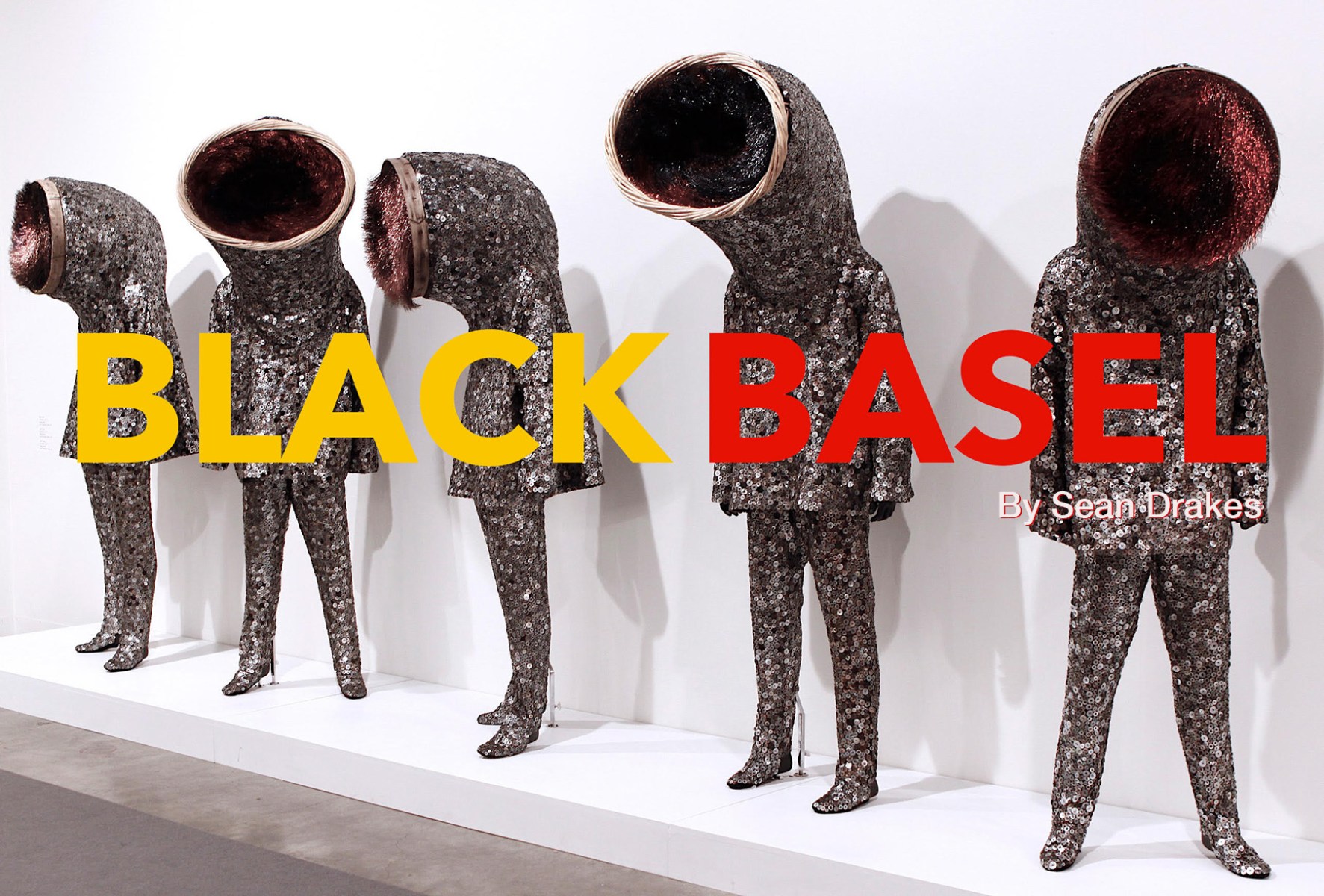
When creative activations and art fairs produced by Art Africa, NO COMMISSION, AfriCOBRA, and PRIZM claimed space adjacent to Art Basel Miami Beach then attracted collectors, scholars and admired artists, Black Basel was born. The intellectual and creative void their presence fills also creates access for communities, curators, and artists who feel priced out of the main event at the Miami Beach Convention Center.
For most of its 20 years, Art Basel Miami Beach has been billed as a 3-day event, though it easily commands a full week (Nov. 28 – Dec. 4, 2022) due to the dizzying array of satellite art fairs, hotel activations, museum unveilings, designer collaborations, private parties, and celeb performances to experience.
Barbadian artist Sheena Rose, whose career is on fire following coverage by The New York Times and Vogue, scored commissions for her vibrant, acrylic-based murals from institutions in Des Moines, Iowa (2022) and Washington, D.C. (2019). “When I first saw Miami Beach, I was impressed by the tents and the way they presented the artists’ work. I exhibited in PRIZM and felt honored to exhibit with artists from the Black Diaspora.” She says her most “surreal and exciting” encounter was when tennis legend Venus Williams purchased her drawing at a Rush Philanthropic Arts Foundation auction. “I do get overwhelmed with the tons of activities, but [Basel Week] is great for networking.”
Word-of-mouth reports are pivotal to attracting Caribbean artists to investigate showing during Art Basel Miami Beach. In 2021, art educator April Bey (Bahamas) appeared on “This Week in Caribbean Art and Culture“, a Sugarcane Magazine podcast hosted in the Convention Center, and Jeffrey Meris (Haiti) installed his multidisciplinary work at NADA Miami. The stimulating mixed media art by Ebony G. Patterson (Jamaica) is always a show-stopper, and Hew Locke, of Guyanese heritage, has had a striking assemblage of replica sea vessels suspended in the foyer at PAMM for multiple Basel seasons.
Nyugen Smith (NYC), Zak Ové (UK), Miles Regis (LA), Wendell McShine (NYC), Christopher Cozier, and Peter Sheppard lead the delegation from Trinidad & Tobago who have exhibited at various fairs during Basel Week. Sheppard positioned his award-winning miniature paintings “in a couple fairs as a steppingstone to have my work seen, if not sold.” He explains, “I looked for galleries [with] ties to the Caribbean Diaspora. “While one gallery charged him a wall rental fee, another invited him to show. “Most galleries selectively feature works from artists they represent and are confident will sell.”
Beyond Black Basel, these two Miami institutions showcase artists of the African Diaspora year-round: Museum of Contemporary Art North Miami and Little Haiti Cultural Center. During Basel Week you can also discover the brilliance of the Diaspora among the collection at Rubell Museum and NADA Miami near the trendy Wynwood Arts District, PAMM and Art Miami a short distance from touristy Bayside Park, and under massive tents raised on the sands of Miami Beach you can explore Untitled and SCOPE.
Many celebs jet to Miami to host Basel parties, but none get it lit like Swizz Beatz. His NO COMMISSION x Bacardi collab, which launched in 2015 with a free concert featuring the incomparable Alicia Keys, remains the hottest ticket. Other headliners over the years include Busta Rhymes, Chronixx and Meek Mill, often with a stack of celebs viewing from the rafters.
In lieu of having a Black Basel app to map your moves in Miami, drop the names of art fairs mentioned above in your social media search to locate experiences that will elevate your Basel Week.

Almost Famous
Abroneka is aiming to become R&B royalty
Unknown girl group Abroneka wants to become a household name, but they won’t sing soca. They have been writing, rehearsing, and perfecting their harmonizing skills for over seven years, now, they’re being shopped to US record labels and are banking on becoming Trinidad’s first R&B export.
The kids-from-the 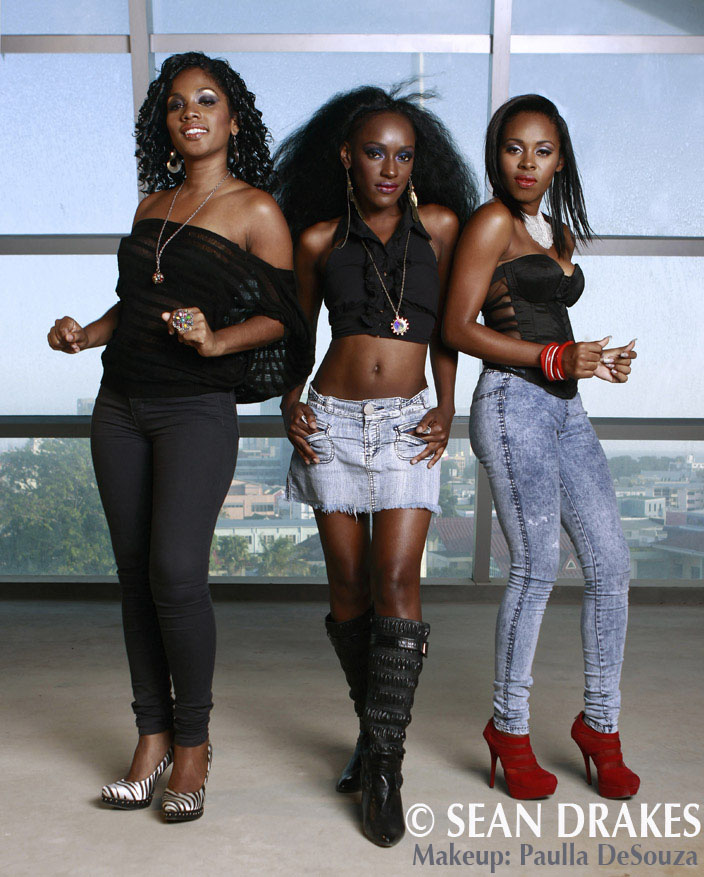 tough-inner-city-with dreams-of-stardom storyline is a familiar script. The reason Abroneka’s first chapter is worth your attention is largely due to the credibility of the accomplished team that grooms their sultry vocals, arranges their music, and polishes their tracks. Champion Sound Studios has mastered Road March and Soca Monarch-winning tracks for Machel Montano, Iwer George, Fay-Ann Lyons, JW & Blaze, and Shurwayne Winchester, while patiently preparing to introduce Abroneka to the North American market.
METRO went in studio with Crissy Abigail Fraser, 23, Rhonda Bobb, 26, and Kandis Dyer, 28, before they set off on their version of an Olympic quest to earn platinum and popularity. A chance meeting in 2005 on the set of Synergy Friday Night Live brought the trio together. After each girl displayed her vocal chops, Rhonda secretly noted who she would team up with to form a group. “Then I took a breath and popped the question: Allyuh want to start a group?!” Junior Lewis coached and produced them, then brought Abroneka to Martin Raymond at Champion Sound Studios. Abigail says Albert Bushe, their former vocal trainer, called their sound “soca pop, a mixture of R&B, soca and dance music.” That was 7 years ago. Today, the tracks they have shipped to US record labels are strictly in the R&B and dance genres.
What will distinguish Abroneka from EnVogue, Spice Girls or Destiny’s Child is yet to be determined. At the moment it’s not lyrical content. Abigail, Rhonda and Kandis summarize that though their ballads are sung with vibrancy, they tend to write about “heartbreak, a first time crush, and bad experiences.” But for good measure, they paired an uplifting message with an upbeat tempo for a track titled “Dancefloor Ain’t Gonna Be Lonely”.
Abigail and Kandis hail from the Beetham, and Rhonda is from Maraval. By day they’re retail sales clerks. But when dusk descends they’re in the studio breathing life into their lyrics. They’re disciplined and determined to realize a musician’s ultimate dream. “We all come from a musical family, it’s in our blood,” shares Rhonda. “The area where I grew up is a bit hostile,” explains Abigail, “there is a lot of heartbreak, a lot of poverty, a lot of negativity that could make you either go negative or positive. I take [all that] and use it as a positive and write a way that people can get out of it.”
Their singles “Close Your Eyes” and “I Like It with the Lights On” are destined to attract contracts and airtime in America’s key urban markets. To get Abroneka in the mood to convert lyrics into groovy tracks simply requires a beat. “When we hear a beat we flow with it,” shares Abigail. When arranger Gregg Assing played a beat for the girls, they instinctively felt it was “sexy, nice” and directed them to close your eyes. “We started harmonizing, once you have the feeling the words flow,” adds Rhonda.
When they attain success they have another mission: “My community made me grow up to be a very headstrong young lady,” admits Abigail. “I want to give back educationally.” To become recording champions representing T&T, Abroneka dismisses the “comfort zone” mindset they say Trinis enjoy, and embraces the Jamaican hunger to win. “They [Jamaicans] push harder, they really fight for what they believe in, what they want they really go for it,” asserts Abigail. “There is talent here, not just soca and wining. They can write, produce, sing any kind of music…they have the talent, they just don’t have the hunger the Jamaicans do.” Yet, Abroneka will fly the Trinbagonian flag when they mount that Grammy Awards podium.
© SEAN DRAKES
[ 404.654.0859 | SEANDRAKESPHOTO@gmail.com ]




 SEAN DRAKES